London wears its Harry Potter history lightly. The city didn’t freeze into a film set; it carried on as millions of commuters crossed the “wobbly” bridge, students vanished behind a luggage trolley at King’s Cross, and City bankers hurried past the Leaky Cauldron’s facade without a second glance. For photographers, that’s the opportunity. The best Harry Potter shots in London work because they are anchored in real streets, trains, and skyline views. With a bit of timing and a sense of place, you can capture images that feel cinematic without a single green screen.
What follows is a field-tested route through the most photogenic Harry Potter locations in London, plus advice on the Warner Bros Studio Tour and how to avoid the usual missteps. It is written to help you get the shot, not just tick the box, and to untangle common confusions like “London Harry Potter Universal Studios” or “London Harry Potter world,” which aren’t actual places here. London has the Platform 9¾ photo op, the Millennium Bridge, Leadenhall Market, and a cluster of locations used for exterior scenes. The detailed sets, the Hogwarts Great Hall, and the Forbidden Forest belong to the Harry Potter Warner Bros Studio Tour London, which sits outside the city near Watford.
Start at King’s Cross: Platform 9¾ and the shop
Arrive early, ideally before 9 am, if Platform 9¾ is high on your list. The queue forms fast, even on weekdays, since this is the London Harry Potter train station moment tourists recognize instantly. The half-trolley embedded in the wall is between Platforms 9 and 10 in the public concourse area, not on the paid side. Staff from the Harry Potter shop at King’s Cross operate the scarf toss and wand props. Expect a line ranging from 10 minutes to 60 minutes. The light is softest shortly after opening, which helps with faces and minimizes glare on the marble.
The Harry Potter shop King’s Cross is a reliable source for souvenirs and has better merchandising than most pop-ups in central London, from house scarves to wand displays. If you want a clean interior shot without crowds, tuck into a corner near the book wall and wait for a gap. Security is friendly but firm about tripods, so go handheld. If your goal is a characterful portrait, ask the staff to swing the scarf, step a half pace to your left, and frame wide enough to catch the station’s ironwork. You can come back at night for moody blue light under the lattice roof, though the queue photo point closes earlier than the station doors. For true train aesthetics, know that the exterior shots of “King’s Cross” in the films leaned on St Pancras next door, whose gothic red-brick facade photographs beautifully at golden hour from the Euston Road side.
The bridge that fell: Millennium Bridge
Anyone searching for the “Harry Potter bridge in London” usually means the Millennium Bridge, which the Death Eaters destroyed in Half-Blood Prince. It’s free, central, and one of the most photogenic spans in the city. For an Instagram-ready composition, stand midway with St Paul’s Cathedral behind you, shooting south toward Tate Modern and the chimney stack. Or reverse it and frame the cathedral’s dome perfectly centered in the bridge’s ribbed lines. A low angle from the bridge deck exaggerates the steel struts and adds drama. Early morning lets you work without dodging runners, and mist creates a cinematic wash over the Thames.
Avoid midday if you can, because the reflective metal can blow out highlights. If the sky is flat, use motion to your advantage; ask your subject to walk through frame, cloak or scarf trailing. In winter, the 4 pm light can be astonishing, with cool hues on the steel and warm flare around the dome. Remember the bridge sways slightly with heavy foot traffic, so keep your shutter speeds up if you want crisp lines.
Leadenhall Market and the Leaky Cauldron facade
Leadenhall Market doubled as Diagon Alley in the first film. The market is a Victorian stunner, painted in burgundy and cream with a wrought-iron roof that glows even under clouds. Turn onto Bull’s Head Passage to find the blue door of an old optician’s shop that stood in as the Leaky Cauldron entrance. The exact storefront has changed over time, and filming dressed it differently than you will see today, so focus on architectural textures. Look for the repeating arches and the play of shadow on the tiles.
Weekdays at lunch bring office crowds, which can work for street shots if you want motion blur. For a more timeless frame, aim for early Saturday. Keep your ISO low and use the long corridor to guide the eye toward your subject, perhaps someone in a cloak reading The Daily Prophet. Photography is usually fine, but be courteous to businesses. If you are joining Harry Potter walking tours London tends to offer, the guides will point out the specific facades and give you a few minutes to shoot.
Borough Market side streets: another Leaky Cauldron
Practical filming moved around the city. In Prisoner of Azkaban, the Leaky Cauldron exterior appears near Borough Market, under the rail lines. The door used was at 7 Stoney Street, which housed a florist and later a restaurant. The area has changed, but the bones remain. Stand across the street to compress the scene with a 50 mm lens and keep the arches in frame. If a train rattles overhead, time your shutter to catch the vibration blur in the lights, a detail that nods to the Knight Bus rattling the windows in the film.
Borough Market is busy, so shoot early or after closing. The alleys behind the market give you brick textures and cobbles that echo the wizarding world without calling attention to tourists. If you want to tie your caption to the films, reference “Harry Potter filming locations in London” rather than pinning it to a single storefront, because tenants change.
Westminster tube: moody geometry under London government
The sleek, futuristic concrete of Westminster Underground station appears as the backdrop when Harry and Mr Weasley ride the escalators in Order of the Phoenix. Security rules apply: no tripods, no flash, keep to public areas and move with the flow. The station’s stacked beams and escalators offer striking lines. Frame from the bottom, shooting upward as your subject ascends. The LED lighting casts a cold tone, which mixes well with Hogwarts House colors in clothing. A short lens exaggerates the structure without needing to step into anyone’s path.

Time it between rush hours to avoid a wall of commuters. If you catch an empty stretch of escalator, take three frames as your subject moves, then choose the position that balances the negative space with the signage. Film fans will recognize the geometry, and your shot will read as futuristic even for non-fans.
Great Scotland Yard and the Ministry phone box
The Ministry of Magic’s visitor entrance, a red phone box, was placed near Great Scotland Yard for filming. The box was a prop and is not installed, which throws some first-time visitors. Still, Great Scotland Yard has the right feel, with government buildings and a quiet side street atmosphere. If you want the Ministry vibe, find any intact K2 or K6 red phone box nearby, keep your frame tight, and use a shallow depth of field to blur the background. Pair the shot with a caption about “London Harry Potter places” so expectations stay honest.
From a technical perspective, these glossy red boxes reflect sunlight like mirrors. Shade works better. Have your subject reach for the receiver, and angle your body to avoid your reflection. A polarizer helps but is not essential if you watch your angles. If you do stumble upon a walking tour here, absorb the guide’s timing tips for traffic and pedestrian flow. They know the gaps.
St Pancras versus King’s Cross: trains, arches, and honesty
The films spliced locations. St Pancras’s exterior, with its grand Gothic revival facade, often stood in for King’s Cross in establishing shots, while interior platform scenes happened elsewhere or on sets. Photographically, St Pancras gives you drama in any weather. Place a subject halfway along the pavement across Euston Road, compress with a medium telephoto, and let the archway swallow the figure in red brick. The hotel entrance provides shelter on rainy days, and puddles make excellent mirrors for reflection shots. If anyone asks in comments about “Harry Potter train station London,” explain that both stations feature in the film lore, then credit the exact facade: it raises your reliability.
Inside St Pancras, the high-arched roof over the Eurostar platforms isn’t accessible without a ticket, but the concourse and the statue of John Betjeman are open. Avoid peak hours or you will fight motion blur from constant foot traffic, and instead lean into panning shots as luggage wheels streak by.
Lambeth Bridge: Knight Bus squeeze
The triple-decker Knight Bus squeezes between two red double-deckers on Lambeth Bridge in Prisoner of Azkaban. The bridge’s purple railings are the tell. Stand on the downstream side to catch the curve with Parliament in the backdrop if the light serves. Sunrise from the south bank gives you low light on the Palace of Westminster. Blue hour can be magical, the bridge lights reflecting on the Thames. If you want a clean frame, scout in person; the bridge is active with cyclists and buses.
Night photography here rewards patience. Brace against the railing and shoot at 1/15 to 1/30 second as a bus goes by, turning its lights into streaks. It echoes the Knight Bus chaos without special effects. If you are on a tighter timeline, one good frame is enough. Do not linger in bike lanes.
Piccadilly Circus: chaos, neon, and Death Eaters
The Death Eaters wreak havoc in central London in the films, and while Piccadilly Circus is only referenced visually, it’s part of the vibe. The screens change constantly, so go for contrast. Turn your exposure down two thirds of a stop to control the highlights in the signage, then focus on a human moment, like friends in house scarves looking up. If you want a slower shutter to paint traffic light trails, get to the island in the middle of the road and use the railing as support. Police presence is heavy; follow instructions and keep your kit contained.
For a quieter Potter echo nearby, the Criterion restaurant’s facade along Piccadilly brings ornate arches and gilded details. It reads as high wizard society in the right crop.
Cecil Court and Charing Cross Road: bookish Diagon Alley energy
Cecil Court off Charing Cross Road is lined with antiquarian bookshops and curiosities, often cited as inspiration rather than a filming location. If your goal is texture and story, it delivers. Late morning brings directional light down the alley; shoot into the glow and use window reflections to layer your frame. Ask permission before photographing inside shops. This is also where you can browse Harry Potter souvenirs London beyond the standard house scarves. Some stores curate vintage editions and unofficial prints that photograph elegantly on a wood table with soft side light.
If rain hits, you get glossy cobbles, umbrellas, and warm windows. A 35 mm lens lets you stay close without distortion, and people barely notice you. It is the kind of place where a caption about “London Harry Potter attractions” might draw purists to debate, but your image will stand on its own.
House of MinaLima and specialized stores
MinaLima, the graphic design duo behind the Daily Prophet and Weasleys’ Wizard Wheezes packaging, operate a gallery-store in central London. For photographers, this is gold. Walls are covered in framed prints, and the color palette pops on camera. Staff usually allow pictures, but ask first and avoid blocking walkways. If you want a portrait, step back to let the print grid fill the background, and keep your subject’s wardrobe simple so it doesn’t compete with the patterns.
The broader landscape of Harry Potter store London options changes. The flagship Warner Bros Studio shop https://soulfultravelguy.com/article/harry-potter-tour-london-uk at Leavesden is unmatched for set-quality props, but in the city, King’s Cross remains the most consistent. Smaller retailers pop up near Leicester Square or Covent Garden, but inventory varies. If your goal is a haul photo, shoot flat lay at your hotel with diffused window light and a neutral background. Hard light turns collectibles into glare and reflections.
What the Warner Bros Studio Tour offers photographically
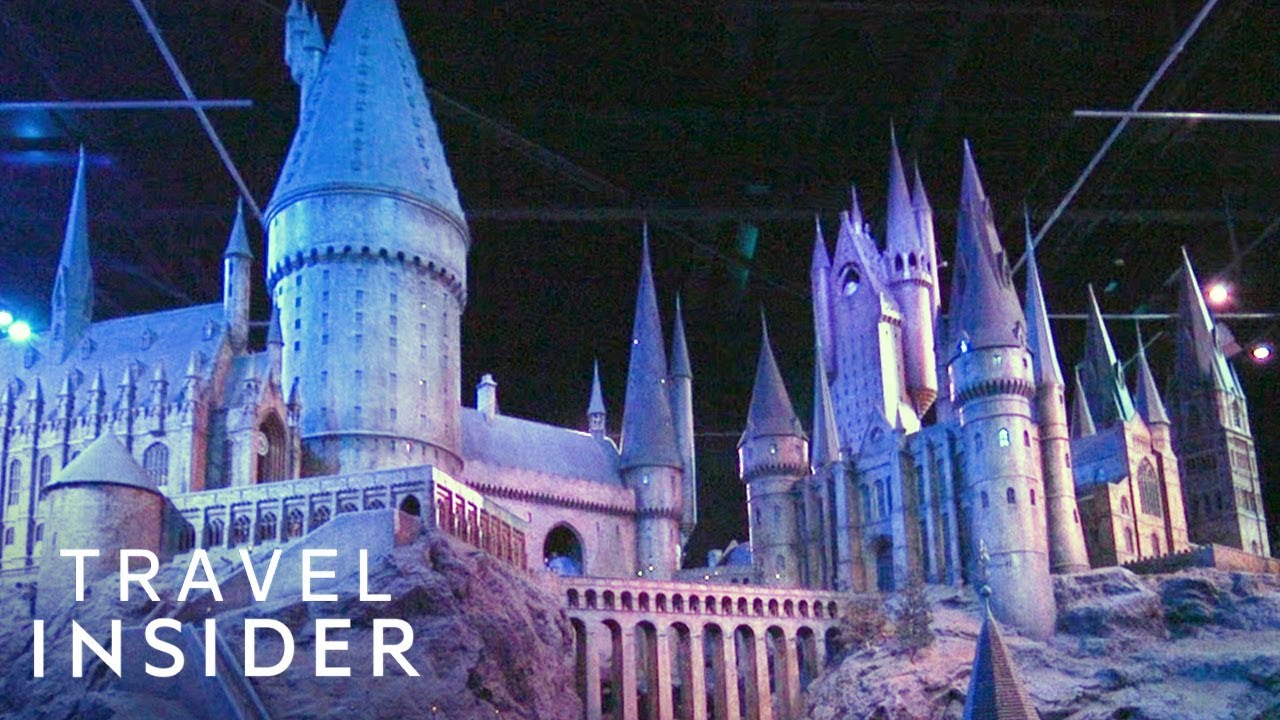
The Harry Potter Warner Bros Studio Tour London is not in central London; it sits near Watford Junction. It is the only place where you can stand in the Great Hall, walk through Diagon Alley under controllable lighting, or point your lens up at the full model of Hogwarts. For context on tickets and timing, “London Harry Potter studio tickets” and “Harry Potter experience London tickets” are phrases you will see online. They refer to the same Warner Bros Harry Potter experience. Book your Harry Potter studio tickets London side, ideally two to four weeks in advance for off-peak, and much earlier for school holidays. The official site lists time slots, and your “entry time” controls when you join the queue, not how long you can stay. Most visits last 3 to 4 hours; photographers who linger might stretch to 5.
The lighting inside is mixed. The Great Hall is warm, Diagon Alley is cool and moody, and the Creature Effects area runs darker than you expect. Bring a fast lens if you have one, and be prepared for high ISO. Tripods are not allowed. Staff are used to people staging quick portraits, but keep things moving. Butterbeer photos look better outside in the backlot, where you also find the Knight Bus, the Privet Drive set, and the covered bridge from Prisoner of Azkaban.
Getting there is straightforward: Euston to Watford Junction by train takes roughly 20 minutes on the fast service, then the dedicated studio shuttle bus runs every 10 to 20 minutes. If “Harry Potter Warner Bros Studio tickets UK” are sold out on your dates, third-party partners sometimes package “Harry Potter London tour tickets” with coach transport, but inventory mirrors the studio’s availability. Avoid overpaying for “VIP” promises that simply bundle standard access with bus seats.
Clearing up Universal Studios confusion
A persistent misunderstanding: there is no “London Harry Potter Universal Studios.” Universal’s Wizarding World parks are in Orlando, Hollywood, Osaka, and Beijing. London offers the Studio Tour and many filming locations in the city. If you see “London Harry Potter world tickets,” check whether the seller means the Warner Bros Studio Tour or a guided city walking tour. The former is a half-day pilgrimage with sets and props; the latter is a street-level experience, best for photographs that tie wizarding lore to real London texture.
A half-day city walk that fits in your camera roll
If you want a tight itinerary that delivers varied shots without burning out, use this loop: King’s Cross for Platform 9¾, then St Pancras exterior, tube to St Paul’s for Millennium Bridge, walk across to the south bank, head to Borough Market side streets, and finish at Leadenhall Market. You’ll hit a train station scene, a river crossing, a gritty alley, and a Victorian market, enough variety for a compelling carousel post. Add Westminster station or Lambeth Bridge if your energy holds.
For a longer Harry Potter London day trip, start with the Studio Tour in the morning, return to Euston mid-afternoon, and catch the golden hour on Millennium Bridge, then evening light at St Pancras. It’s doable, but you will walk a lot. Wear shoes that can handle 15,000 steps.
Techniques that yield stronger images at these spots
The strongest Potter-centric photos in London respect the city’s normal life. It helps to think in terms of layers: foreground detail, subject, background element that anchors the scene to a location. On Millennium Bridge, the steel ribs do the work; at Leadenhall, the repeated arches. At King’s Cross, include signage or the roof lattice. Work with available light rather than fight it. A scarf and a wand are props, not crutches. They should accent the scene, not overwhelm it.
Don’t sleep on reflections. Puddles outside St Pancras or along the Thames embankment can double your frame, and shop windows in Cecil Court or Leadenhall add depth. When crowds are heavy, embrace them with slower shutter speeds to paint movement around a still subject, which reads as magic without effects. Keep your white balance consistent across a series so the carousel feels unified.
Security and courtesy matter. Tube stations and markets have rules; tripods are the usual no-go. Private property like Leadenhall Market is generally welcoming if you are quick and unobtrusive. If you’re working with a model in wizard robes, avoid blocking entrances. Staff will ask you to move if you look like a film crew.
When to book and how to avoid pain points
The best months for moody skies without constant downpour are late September through November, and March into May. Winter brings early sunsets that hand you blue hour at a humane time. Summer offers late light but thicker crowds. For the Studio Tour, weekends book out first. If you need Harry Potter Warner Bros Studio tickets UK during school holidays, secure them as soon as your dates are set. Flex tickets are rare; most are tied to a slot.
Guided options range from focused Harry Potter walking tours London delivers in two hours to full-day Harry Potter London tour packages that mix locations with transport. A good guide will help with angles and crowd navigation. If you prefer full independence, geotag privately while you shoot, then tag the general area when posting to avoid encouraging overcrowding at small spots like narrow passages.
Two short, high-yield lists for planning
Packing shortlist for better photos without a heavy bag:
- A fast prime lens like a 35 mm or 50 mm A small microfiber cloth for rain and fingerprints A compact power bank and cable A lightweight scarf or prop for motion A zip bag to protect your phone or camera in showers
Common misconceptions to skip:
- “Universal Studios London” exists; it does not The Platform 9¾ trolley is on the actual platform; it is in the concourse All Diagon Alley scenes were filmed in one market; they were spread across sets and streets You can bring a tripod everywhere; most central spots forbid them The Studio Tour is in central London; it is near Watford, reached by train and shuttle
The play, the merch, and what tells a story
The West End production Harry Potter and the Cursed Child, often folded into “London Harry Potter play,” is a different experience entirely. Photography is not allowed during the performance, but the Palace Theatre facade on Shaftesbury Avenue is worth a quick exterior shot. Go at dusk when the sign glows. If you book tickets, plan for a long evening; the show runs in two parts on some schedules, and the foyer gets crowded.
For souvenirs, moderation reads better on camera. One or two distinctive items, like a MinaLima print or a high-quality scarf, photograph more elegantly than a mound of plastic wands. If you are after “Harry Potter merchandise London” with real presence, the Studio Tour shop is the place for set-accurate replicas, but the King’s Cross shop delivers for travel-friendly items. Keep receipts in case of returns; sizing can be inconsistent across lines.
Stitching a narrative across your feed
A strong London Harry Potter photo set benefits from contrast. Open with a wide establishing shot on Millennium Bridge or outside St Pancras to place your audience in the city. Follow with a close portrait at Platform 9¾, scarf in motion. Then offer a quiet textural frame at Leadenhall, maybe a shop window reflection, and finish with a night shot on Lambeth Bridge or the Palace Theatre sign. In captions, be clear and accurate with names: Harry Potter Platform 9¾ King’s Cross, Millennium Bridge Harry Potter location, Harry Potter shop at King’s Cross London. People searching for Harry Potter London attractions appreciate specifics they can follow.
If you want to mention tickets, use the exact phrases people search for while staying straightforward. For example, “Booked Harry Potter Studio Tour UK slots two weeks ahead; took the Euston to Watford Junction train, then the shuttle.” That helps others without cluttering your story.
Final notes from the street
London is a city that shrugs off fame. Filming locations are part of the daily backdrop. Your job as a photographer is to move with that flow, spot the moments, and let the history seep through the edges of the frame. Take the shot that mixes wizarding lore with the grit of a working city: a cloak flashing through a market as a porter wheels crates, or a wand hand raised under the concrete bones of Westminster station. That blend is the London Harry Potter experience in a single image. If you leave room in your day for a missed train, a passing rain squall, and an unexpected patch of golden light on brick, the photos will take care of themselves.